
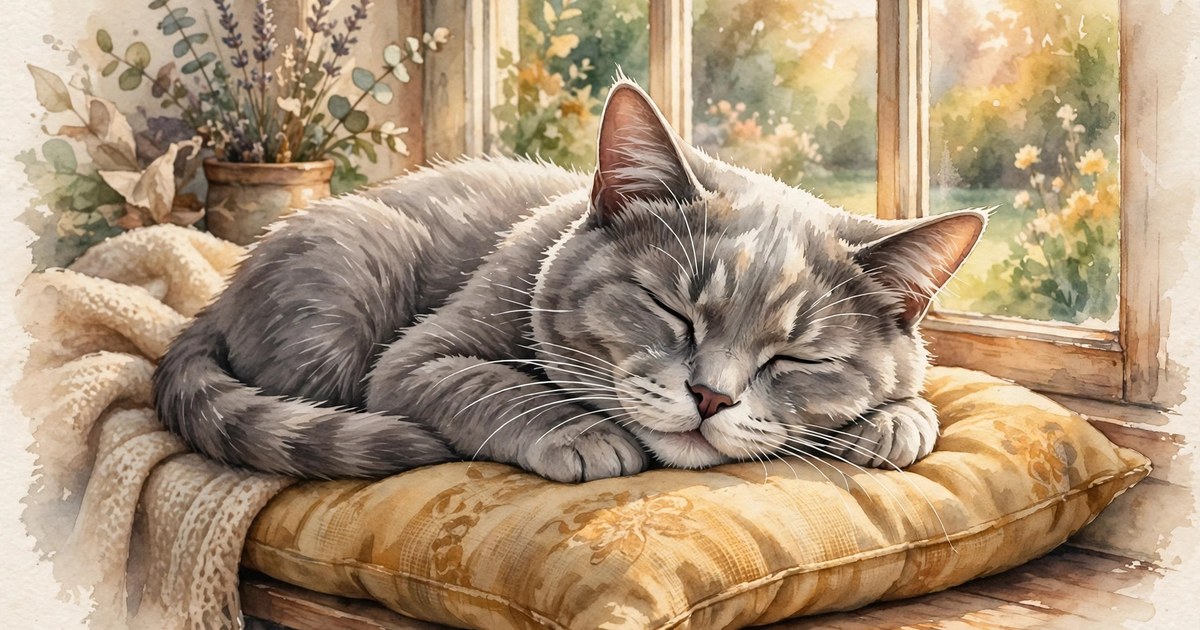
Seven is the birthday when most owners stop thinking of their cat as an adult and still do not think of them as senior. That in-between stretch is exactly when the most useful care begins. Changes are small and easy to miss — a slightly lighter step on the stairs, a little less interest in the top of the bookshelf — and catching them early is what keeps the next years comfortable.
"Senior" is a gradient, not a birthday
There is no single age when a cat becomes senior. Cornell's Feline Health Center notes that many cats begin to encounter age-related physical changes between seven and ten years of age, and most do so by the time they are 12. The AAFP's feline life stages group cats 7 to 10 as "mature adults" and 10 to 15 as "seniors" — so the seventh birthday is the practical moment to start the senior habits, not the tenth. Source: Cornell Feline Health Center, The Special Needs of the Senior Cat.
Cornell's key line is worth remembering: advancing age is not a disease. Many of the conditions that appear in older cats cannot be cured, but they can often be controlled — and that is only possible when someone notices early.
Move the vet rhythm up a gear
For senior cats, the AAFP recommends a veterinary examination at least every six months — in a senior cat's life, six months is about as long as two years is for a person, and a lot of change can happen in that window. For cats over 15, the recommendation steps up to every four months. A baseline set of bloodwork and a urinalysis gives the vet trends to compare against, which is where early detection actually lives. Source: AAFP, Your Cat's Life Stages brochure (PDF).
Practical move: ask your vet to sketch a written senior care plan — visit frequency, what gets checked each time, and roughly what it costs. A plan you can budget for beats a surprise every time.
Track the quiet numbers: weight, appetite, water
Cats are experts at hiding illness, so the numbers do the talking. Weigh your cat once a month — a kitchen scale and the carrier work fine — and write it down. A slow slide downward can matter before the appetite visibly changes. Our weight diary guide covers a method that takes under a minute.
Watch the water bowl too. Drinking noticeably more or less than usual is a change to report to your vet, not a diagnosis to make at home. Chronic kidney disease is one of the most common conditions in older cats, and its earliest hints are usually subtle: more drinking, more peeing, a slowly thinning frame. Same rule as always — the observation is yours, the interpretation belongs to your veterinarian.
Make the home senior-proof
Arthritis is far more common than it looks. Studies using X-rays found evidence of degenerative joint disease in about 90 percent of cats over 12, yet most of those cats never obviously limped — they simply stopped jumping as much, slept more, and avoided stairs. Cornell notes that arthritic cats may have difficulty reaching litter boxes and food dishes when jumping or stairs are required. Source: Cornell Feline Health Center, Is Your Cat Slowing Down?.
The fixes are cheap and immediate: a low-entry litter box on the floor the cat already uses, a step or sturdy box to the window perch, food and water on the same floor as the resting spot, and a warm bed away from draughts. Never give human painkillers — acetaminophen and ibuprofen are dangerous to cats. If you suspect joint pain, that is a vet visit, and there are safe feline pain-relief options your vet can choose from.

Grooming and claws need your help now
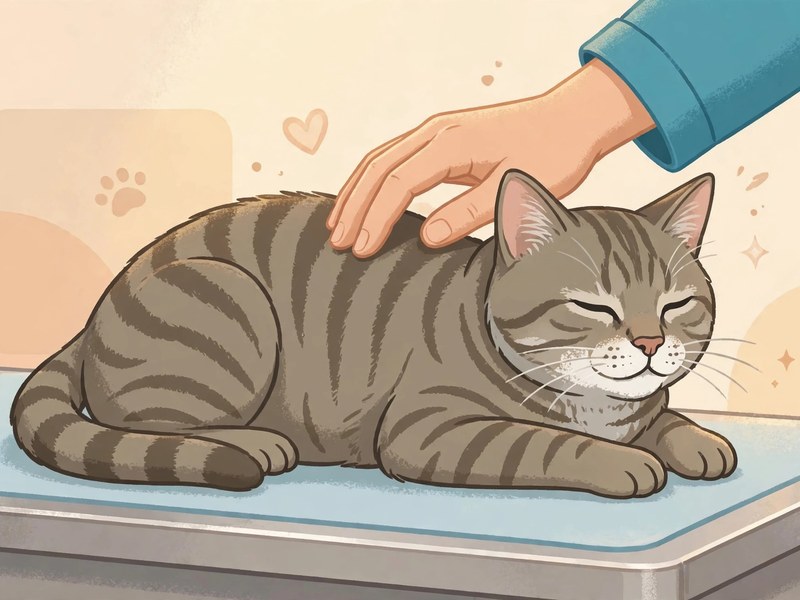
Older cats groom themselves less effectively, which can lead to matting, skin odor and inflammation. A short, gentle brushing session a few times a week does two jobs at once: it keeps the coat comfortable and it tells your hands about lumps, scabs or sore spots you would otherwise miss. Be extra gentle around hips and elbows — those are the joints arthritis favors.
The claws of aging cats are often overgrown, thick and brittle, so keep the trimming routine going even if the cat mostly scratches less. Our calm nail-trim routine is built for exactly this: one claw at a time, no wrestling.
Keep life predictable — and call the vet early
Age-related brain changes can show up as wandering, excessive meowing at night, apparent disorientation, or avoiding social interaction. A predictable routine, consistent furniture, and a dim night light in the hallway reduce the confusion. But "old age" is never the final answer for a new behavior: any persistent change deserves a vet visit, because the fixable causes are common and the earlier they are found, the better they respond.
That is the entire senior-cat strategy in one sentence: more frequent professional eyes, your own monthly numbers, and a home that gets a little easier every year. Start at seven and your cat gets the benefit of every year that follows.