
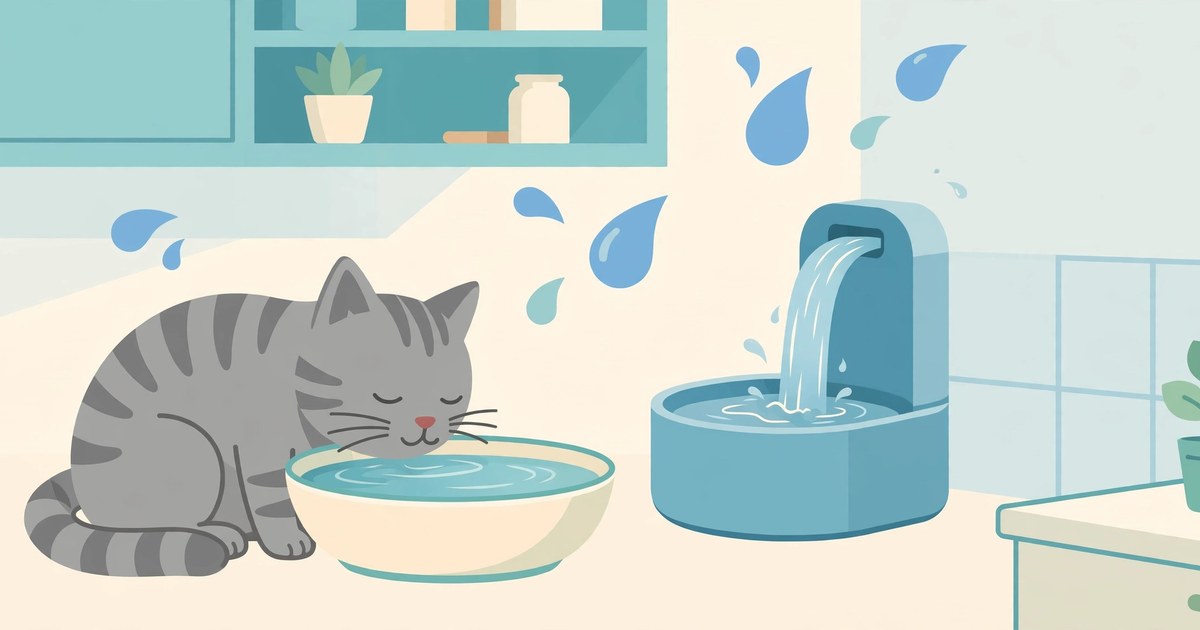
Cats descend from desert wildcats that got most of their moisture from prey, and the house cat still carries that design: a weak thirst drive and efficiently concentrated urine. That exact combination — too little water in, too concentrated urine out — shows up again and again in feline urinary problems. Source: Cornell Feline Health Center, hydration.
How much water your cat actually needs
Cornell’s Feline Health Center puts the daily target at about 4 ounces (roughly 120 ml) per five pounds (2.3 kg) of lean body weight — which means the average 10-pound (4.5 kg) cat needs about one cup, roughly 230–240 ml, of water every day. That total includes the moisture hidden inside food, not just what you see disappear from the bowl. Source: Cornell Feline Health Center, hydration.
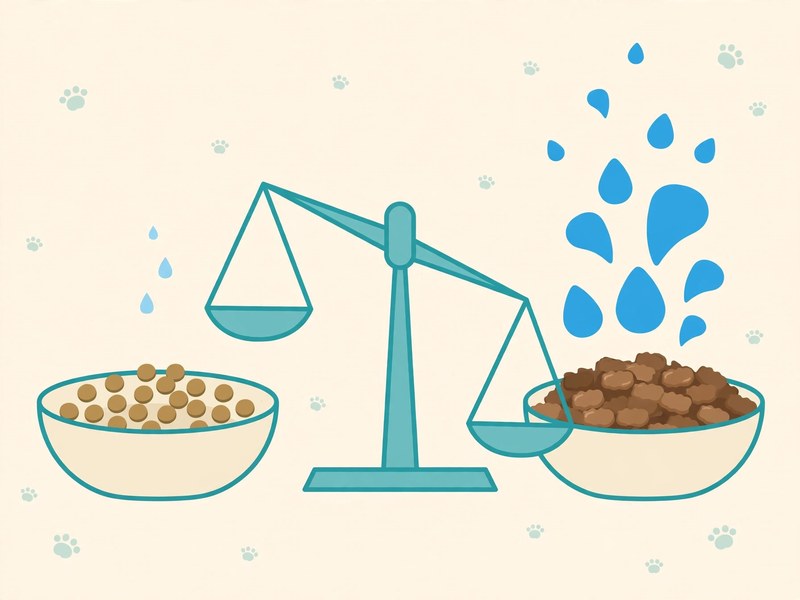
Dry kibble is around 10% moisture, so a cat eating 60 g of kibble gets only about 6 g of water from its food and must drink almost the whole 230 ml — a full glass — every day. Wet food is up to 80% moisture: 200 g of wet food delivers roughly 150 g of water, leaving only about 80 ml to drink. Cats are simply not built to drink a glass of water a day, which is why dry-only cats so often run mildly dehydrated.
Let wet food do half the work
The single most effective hydration change is dietary, not architectural: raise the wet share of the diet. Cornell veterinarian Dr. Richard Goldstein recommends that at least half of a cat’s diet be wet food, and notes that urinary stones are seen most often in cats that are not very active, do not take in enough fluids and do not urinate enough. Even one wet meal a day shifts the maths — replacing half a dry ration with 100 g of wet food adds roughly 70 ml of water without the cat drinking a single extra sip. Source: Cornell Feline Health Center, bladder and kidney stones.
Two tricks stretch wet food further. Stir a spoonful of warm water into it — most cats accept the soupier texture. And freeze plain no-onion-no-garlic meat broth (or the liquid from a can of tuna in water) into ice cubes: one melted over dinner is a watery bonus a picky cat will actually eat.
Make water easy to find
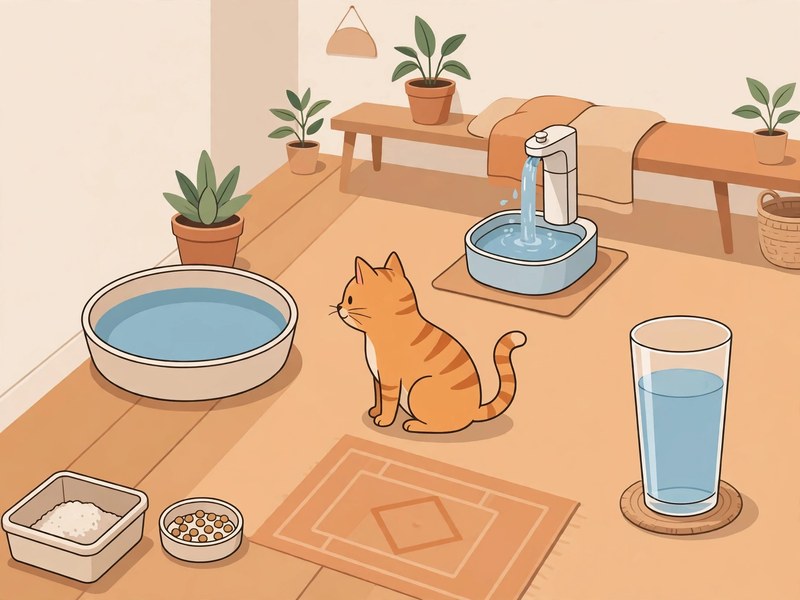
Now the bowl setup. The most common mistake is one bowl, sitting right next to the food. Cats in the wild do not drink where they eat — water near the kill site may be contaminated — so many cats walk straight past a bowl parked beside the kibble. Move at least one water station a few metres away from the food, and never right next to the litter box.
Think in stations, not bowls: one more water spot than you think you need, in the rooms the cat actually uses. Wide, shallow bowls are easier on whiskers; ceramic or stainless steel stay cleaner than plastic. A drinking fountain tempts many cats with moving water — choose one you can fully disassemble and wash weekly, because a slimy fountain is worse than a clean bowl. And refresh every bowl daily: cats prefer fresh water and will skip a stale bowl for the bathroom tap. Source: Cornell Feline Health Center, bladder and kidney stones.
Check intake without obsessing
You do not need a graduated cylinder — two low-effort checks are enough. First, know your cat’s clumping-litter rhythm: clumps getting consistently smaller, or more frequent visits with less result, deserves a vet call, not a shrug. Second, measure the bowl weekly: fill to a mark, and 24 hours later (no top-ups) measure what’s left. Look for trends over a fortnight, not one day’s number.
Two quick body checks help too. Gently lift the skin between the shoulder blades and release — in a well-hydrated cat it snaps back quickly, in a dehydrated cat it stays tented. Dry, tacky gums are another flag Cornell lists. These are rough home checks, not diagnoses, but they tell you when “drinks less than usual” has become “call the vet”. Source: Cornell Feline Health Center, hydration.
When to call the vet
Most hydration work is preventive, but some signs need a same-day call: straining to urinate, frequent trips with tiny results, blood-tinged urine, or crying in the litter box. A male cat that strains and passes no urine at all is an emergency — a blocked urethra can turn fatal within a day or two, day or night. Source: Cornell Feline Health Center, bladder and kidney stones.
Also call if drinking suddenly drops, the cat turns lethargic or loses its appetite, or you notice vomiting or diarrhoea — all common routes to dehydration. Senior cats deserve extra attention: kidney disease, diabetes and hyperthyroidism can all drive excess water loss. Source: Cornell Feline Health Center, hydration.
Try the related tool ↗