

Most cats do not settle in during one afternoon. Animal welfare organisations see the same pattern again and again: the first 24 to 48 hours are for hiding, days two to four bring cautious exploring, and a comfortable routine takes one to three weeks. Your job this week is not to befriend the cat — it is to be predictable.
Set up one starter room before you open the carrier
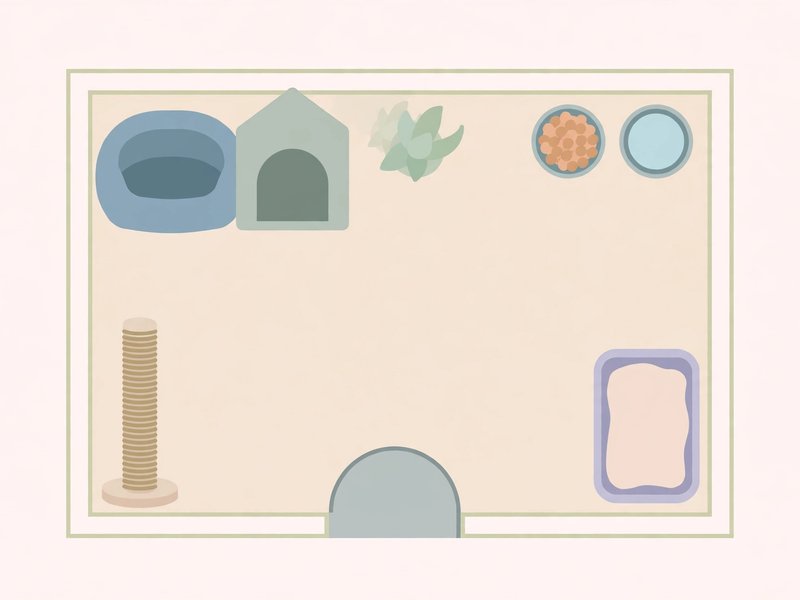
Pick one quiet room and close the door. Put food and water bowls, a litter box, a scratching post and a hiding place inside — a cardboard box with a blanket works perfectly as a first hide. Place water away from food, and keep the litter box at the other end of the room, not next to the bowls. This starter room is the cat's whole world for the next few days. Source: AAFP Cat Friendly Homes.
Keep the guest list to zero this week. Loud greetings and visiting hands are exactly what a new cat does not need while it learns the smell of one room.
Day 1: open the carrier, then leave
Put the carrier down in the starter room, open the door, and step out for 30 to 60 minutes. Let the cat come out on its own schedule — some walk out in five minutes, some need the whole evening. Do not pull the cat out.
Feed the same food the shelter or previous home was using. A sudden food change on top of a new home commonly causes stomach upset, so if you plan to switch, do it gradually over 7 to 10 days: mix 25% new food with 75% old, then 50/50, then 75/25. Source: ASPCA general cat care.
Days 2–4: make the day predictable
Feed at the same two times every day. Adult cats do well on two measured meals rather than a bowl that is always full — measuring means you will actually notice when the cat eats less, which is one of the earliest health signals.
Add two play sessions of 10 to 15 minutes with a wand toy, finishing each with a small meal or treat. This mimics the hunt-catch-eat sequence and burns off evening energy. Otherwise, sit on the floor and read your phone. Let the cat come to you — a cat that chooses the first touch trusts faster than one that is grabbed.
Days 5–7: open the house one room at a time
When the cat eats confidently and uses the litter box reliably, open one new room at a time. Keep the starter room as a home base with its litter box. A useful rule for litter boxes is one per cat, plus one, spread around the home rather than lined up in a row.
If you have other pets, wait. A two-week separation with scent swapping (blankets first, then brief door-cracked meetings) gives a far better introduction than a face-to-face meeting in week one. Source: Cats Protection, bringing your cat home.
When to call the vet
Book a first check-up within the first seven days, even if the shelter already vaccinated the cat — bring the vaccination and microchip paperwork. Then watch for red flags: no food or water for 24 hours, no urination for 24 hours, hiding with zero intake beyond 48 hours, sneezing with nasal discharge, or persistent lethargy. These warrant a call, not a wait.
Two five-minute jobs worth finishing in week one: get the microchip registered under your name, and save your vet's number in your phone.
Try the related tool ↗